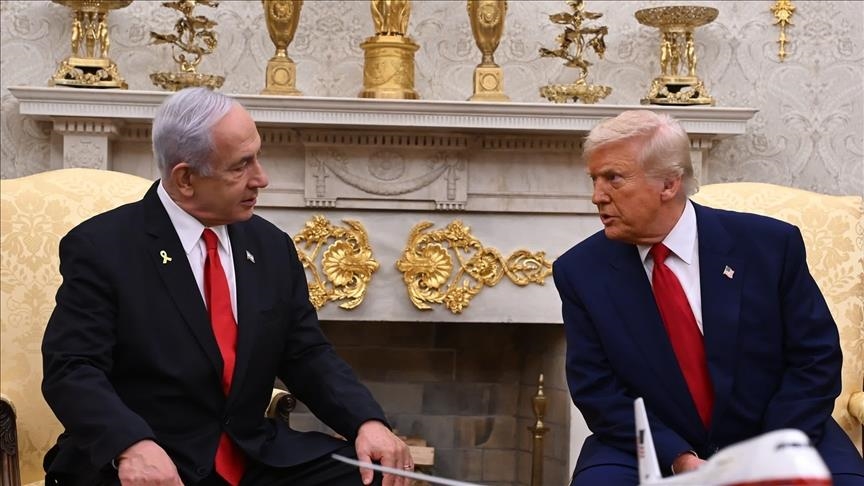

n a fiery new statement, President Donald Trump praised Israeli Prime Minister Benjamin Netanyahu for ordering strikes on Iran’s nuclear facilities — and then equated himself with the embattled Israeli leader, declaring: “I guess I am a war hero too.”
The comments came during an interview with conservative host Mark Levin, where Trump lauded Netanyahu as a “great defender of his people” and said his own decision to deploy U.S. bombers against Iranian targets deserved similar recognition.
Trump boasted that he had “settled six wars” and framed his role in authorizing the strikes as proof of his strength on the world stage. However, the remarks have already sparked backlash from veterans and critics who point out that Trump himself never served in the military, having avoided the Vietnam draft through medical deferments, including a controversial bone spur diagnosis.
His latest attempt to cast himself as a wartime leader underscores Trump’s ongoing strategy of portraying himself as the architect of bold, decisive action — especially in the Middle East, where he has doubled down on aligning U.S. policy with Israel.
But critics say the self-comparison to Netanyahu, who faces legal troubles and international scrutiny, is both politically risky and historically misleading. They argue that ordering bombings does not equate to military heroism, and that Trump’s framing disrespects actual veterans who put their lives on the line.
As tensions with Iran continue to escalate, Trump’s rhetoric signals that he intends to use foreign policy decisions as a key part of his 2026 midterm strategy, while drawing sharp contrasts between his leadership style and that of his domestic rivals.


